Literature reviews
How to Find Credible Academic Sources for a Literature Review
Where to search, how to phrase a query, how to tell a scholarly article from a confident web page, and how to keep track of what you have read so the reference list writes itself.
Literature reviews5 min read
PassResearch Editorial
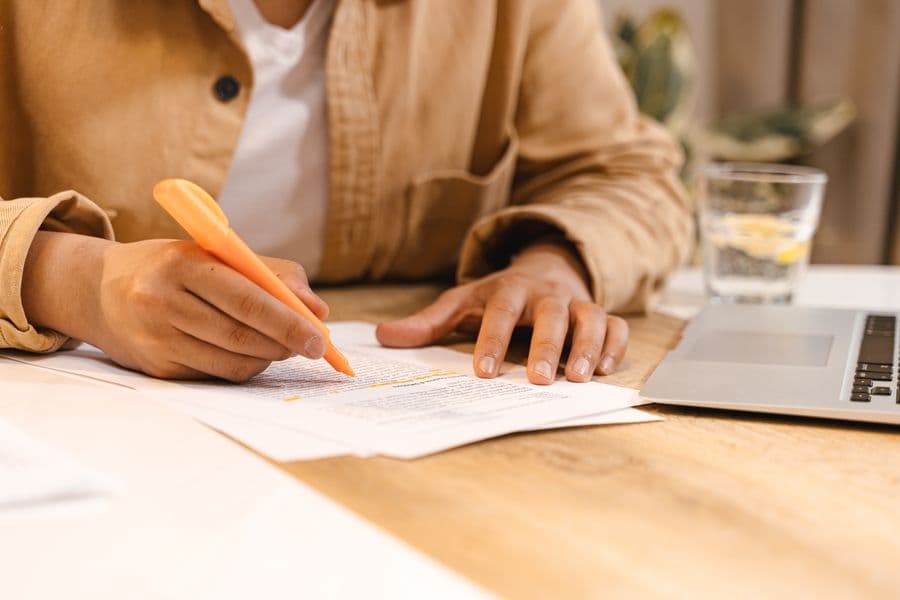
Photo by Malte Luk on Pexels
A literature review fails in two directions. Either it cites too little and the argument floats, or it cites a great deal and the argument is buried. Both are usually search problems before they are writing problems.
This guide covers where to search, how to build a query, how to judge a source once you have it, and how to keep records so that writing the review does not mean re-reading everything.
Where to search
Use more than one place, and treat each for what it is:
- Subject databases for your discipline. These index peer-reviewed work and usually allow precise field searching.
- Multidisciplinary indexes such as Crossref, OpenAlex and Semantic Scholar for coverage, citation links and open-access copies.
- Your university library catalogue for books, chapters and locally held theses that are not indexed elsewhere.
- Institutional and government repositories for local reports, policy documents and dissertations from your own country, which are often the only credible source for local context.
- Google Scholar as a discovery layer, not as a source of record. It finds things well and judges nothing.
Reference lists of good articles are one of the most efficient search tools available. If a source is central to your topic, its bibliography is a curated map of the field.
Build a query instead of typing a sentence
Search engines behave differently from search boxes in databases. Use both properly.
Database searching
Break your topic into concepts, then list synonyms for each:
- Population or setting, for example: undergraduate students, university students, higher education.
- Concept, for example: research supervision, academic writing, dissertation.
- Outcome or angle, for example: quality, feedback, completion.
Combine synonyms with OR inside a concept, and concepts with AND across. Use quotation marks for phrases. Use truncation where the database supports it, for example a stem plus a wildcard, so that variations of a word are caught in one search.
Keep a search log as you go. Record the database, date, exact query and number of results. When your supervisor asks how you found your sources, you will have the answer, and you will be able to reproduce the search later.
Snowballing
When you find a strong article, work in three directions:
- Backwards through its reference list.
- Forwards through the works that cite it.
- Sideways to other work by the same authors on the same topic.
A single well-chosen article, followed carefully, often produces more usable sources than ten keyword searches.
Judging a source before you rely on it
Ask five questions, in this order:
- Who is accountable for it? A named author with an institutional affiliation, or an anonymous page?
- Was it reviewed? Peer-reviewed journal article, edited book, thesis examined by a committee, or self-published?
- What is the evidence? Data collected and described, a systematic synthesis, or assertions with no method?
- How does it relate to your question? Direct evidence, adjacent evidence, background, or theoretical framing?
- Could it be outdated for this question? In fast-moving technical areas, recency matters more than in conceptual theory.
Signals that a source is weaker than it looks
- No methods section, but strong conclusions.
- Citations that do not support the sentence they are attached to.
- Preprints presented without noting they are not yet peer reviewed.
- Commercial pages that read like academic articles.
- A journal you cannot find in a reputable index or on the publisher's own site.
An accurate citation of a weak source is still a weak source. Accuracy of formatting is not the same as quality of evidence.
Reading efficiently
You cannot read everything closely, and you should not try. Use a tiered approach:
- Screen on title and abstract. Keep, discard, or mark as uncertain. Record the decision.
- Skim on structure. Read the abstract, introduction's last paragraph, method headings, results headings and the discussion's first and last paragraphs. This is usually enough to classify the study.
- Read closely only what you will cite for a substantive claim. Take notes in your own words and record the page number or section for every point you may use.
Write your note in two parts: what the source claims, and what you think about the claim. Mixing the two is how students later attribute their own reasoning to an author.
Keep the reference list as you go
The reference list should be a by-product of reading, not a task at the end. Every time you decide a source is worth keeping, record:
- Authors, year, title, and the container: journal, book or report.
- Volume, issue, pages.
- DOI or a stable URL.
- The source type and where you found it.
- A one-line note on why it matters to your argument.
A reference manager can hold this for you, and PassResearch's evidence library does the same job inside a project so a source captured for the literature review is available later for citations. Whichever tool you use, do not keep the only copy of your notes in a document you cannot search.
From sources to a review
Once you have thirty or forty screened sources, stop searching and start organising. Group them by the idea they speak to, not by author. Within each group, order them so the argument moves: what is established, what is contested, what is missing.
Write each paragraph around one claim. Cite the sources that support, complicate or contradict it. A paragraph that lists authors without making a claim is a catalogue entry, not a review.
Key takeaways
- Search several places, and log every query so your work is reproducible.
- Use reference lists and citation trails, not only keyword boxes.
- Screen on evidence and accountability before you screen on writing quality.
- Record sources as you read, so the reference list is downstream of your reading.
- Organise the review by idea, and let each paragraph make one claim.
Getting the search and the record-keeping right early is what makes the review chapter tractable later, and it is also what makes the APA 7 reference list accurate without a last-minute scramble.
PassResearch Editorial
Editorial team, PassResearch
Keep reading
Related notes
Pieces that build on the same idea or the same stage of the work.

Academic integrity & AI5 min read
Using AI in Academic Research Responsibly: Accuracy, Citations, Originality, and Academic Integrity
AI can help you read, plan, check and revise. It cannot be the source of your claims. This piece covers verification, fabricated citations, disclosure, privacy and the institutional rules that apply to you.

Dissertation & thesis preparation6 min read
How to Structure a University Dissertation, Chapter by Chapter
What each chapter is for, how the research questions connect to the methodology, how the literature supports the problem, and why the conclusion must follow from findings you actually have.
Citations & referencing5 min read
APA 7 Referencing Explained: In-Text Citations, Reference Lists, and Common Errors
In-text citations and reference entries do different jobs. This explainer covers author and date formats, direct quotation, paraphrasing, DOI handling and the mistakes that appear most often in marked work.
From reading to writing
Turn this method into your own document.
PassResearch connects real scholarly sources to the sections you write, so every claim stays traceable.